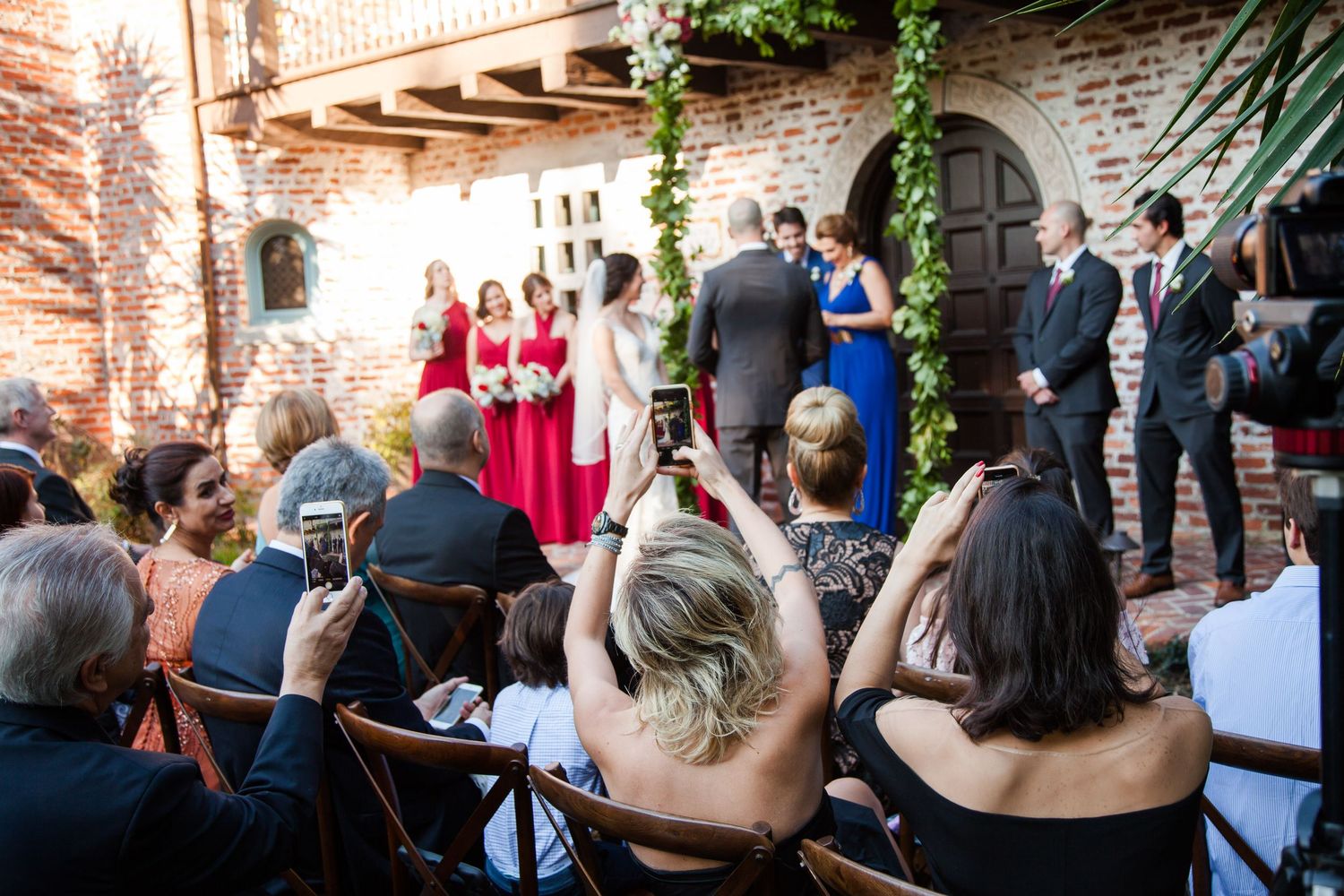
An unplugged ceremony is one where guests are asked to put away their phones and cameras so they can be present and so the photographer can capture the moment without obstruction. Many couples choose it because phones in the aisle can block the photographer's view, distract guests, and put someone else's screen in your photos. It isn't the right choice for everyone, though. Here is what an unplugged ceremony means, the benefits and drawbacks, and how to do it gracefully.
What "unplugged" means
An unplugged ceremony usually means asking guests to turn off or silence their phones, put cameras away, and watch the ceremony without recording. Some couples extend this to the whole day, while others limit it to the ceremony. Either way, the goal is to keep the moment focused and the view clear.
Why couples choose it
- Clearer photos. Your photographer can capture the aisle, the vows, and the reactions without phones, tablets, or arms in the way.
- A more present ceremony. Guests watch with their own eyes, not through a screen.
- Less distraction. Buzzing and glowing phones fade away.
- A more emotional atmosphere. Many couples say the ceremony feels warmer and more intimate.
- Control over what's shared. You decide when and how your photos appear online.
Why some couples don't
- Guests may want to capture the moment, especially older relatives or loved ones who couldn't travel.
- Some guests need devices for accessibility, or for family communication.
- A strict policy can feel unwelcoming, if it's delivered awkwardly.
- You may want to share the moment live, with guests who can't attend.
- You may enjoy the photos guests take, and the candid angles they capture.
There's no wrong answer, only the one that fits your priorities and your guests.
Middle-ground options
If a full ban feels too strict, consider a softer approach.
- Unplugged for the ceremony only, with phones welcome at the reception.
- Phones away during the processional and vows, with photos allowed after.
- A designated photo window. Let guests take photos right after the ceremony, or during a special moment.
- A live stream for remote guests, operated by a vendor, so others don't need to record.
- A shared photo album, where guests can upload their pictures after the wedding.
- A "no flash" rule, so guests can take photos without disrupting the photographer.
How to ask guests
Tone makes all the difference. A warm, clear request works far better than a stern rule.
- Explain the reason. People are more willing to comply when they understand why.
- Use friendly language. "We'd love for you to be fully present with us."
- Tell guests in several places, such as the invitation, your website, and a sign at the ceremony.
- Have your officiant mention it. A quick reminder before the ceremony starts is very effective.
- Be gracious about exceptions. A gentle approach avoids awkward moments.
Sample wording
- For a sign:
- Welcome! We're so glad you're here. Please put your phones away and enjoy the moment with us. Our photographer will capture the day, and we'll be sure to share the photos with you.
- For an officiant's announcement:
- Before we begin, the couple has asked that you silence your phones and put them away, so everyone can be fully present. Their photographer will be sharing images with you afterward.
- For your website:
- We're having an unplugged ceremony, and we'd love for you to enjoy it without screens. After the ceremony, feel free to take as many photos as you like!
Make it easier for guests
- Offer a place to put phones, like a basket or a sign at the entrance.
- Share the photos quickly. Giving guests a link to the gallery eases the pressure to take their own.
- Tell the wedding party, so they can set an example.
- Ask your planner or ushers to remind guests gently as they arrive.
- Have a plan for stragglers. A kind, quiet reminder works better than a public correction.
What it means for your photographer
An unplugged ceremony helps me do my job.
- Clear sightlines. No phones, tablets, or arms in the aisle.
- Natural expressions. Guests aren't posing for their own cameras.
- Fewer interruptions. I can focus on the story, not on dodging devices.
- Cleaner images, with no screens or glare in the frame.
If you want guests to take photos at certain times, tell your photographer so we can plan around it.
Unplugged ceremony etiquette for guests
If you're a guest at an unplugged ceremony, a few thoughtful habits help.
- Silence your phone before you sit down, and keep it in a pocket or purse.
- Respect the couple's wishes, even if others don't.
- Enjoy the moment. You'll remember it more vividly without a screen.
- Wait for the photo window. Many couples invite guests to take pictures right after the ceremony.
- Ask first, if you're unsure whether photos are okay.
- Share the gallery link with family who couldn't attend.
Unplugged at the reception
Some couples extend the request to the whole day, but many prefer to allow phones at the reception. If you want a partial approach, consider:
- Unplugged for the ceremony and toasts, with phones welcome during dinner and dancing.
- A designated photo moment, like a group photo or a grand exit, when everyone can take pictures.
- A shared album or a hashtag, so guests can contribute their photos.
- A photo booth or a fun prop area, which gives guests a way to take pictures without disrupting key moments.
Common mistakes
- Springing the rule on guests. Tell them in advance.
- Being too strict or too casual. Find a balance that fits your group.
- Forgetting to tell the wedding party. They're the example.
- Overlooking accessibility. Be flexible for anyone who needs a device.
- Skipping the follow-up. Share photos soon, so guests feel included.
The bottom line
An unplugged ceremony is a gift to yourselves and your guests, a chance to be fully present for a moment that happens once. Whether you choose a full ban, a partial one, or none at all, communicate clearly and kindly. If you'd like help writing your sign or planning the timeline, I'm happy to help.