You can include your dog in your wedding day, and many North Florida couples do, as long as you check your venue's rules, assign a dedicated handler, and plan the pet's role around their temperament. The best pet involvement is short, simple, and set up so the animal is comfortable and the humans can relax. Here is how to decide whether your pet should attend, how to plan their part, and how to photograph them well.
First, decide whether your pet should be there
Not every pet enjoys a wedding. Crowds, music, strangers, and a long day can be stressful for animals, and a stressed pet is hard to photograph and harder to manage. Be honest about your pet's personality.
- Your pet Good fit for Better to keep for portraits or the engagement session
- Calm, social, well-trained dog Ceremony, portraits, family photos
- Excitable or easily distracted dog Short portraits before the ceremony Full-day attendance
- Anxious or reactive dog Quiet private moments Ceremony, reception, crowds
- Cat A private photo at home or a quiet getting-ready moment Venue appearances
- Puppy A short, supervised appearance Long events
- Horse or larger animal Special settings with trained handlers Typical venues
If your pet isn't comfortable around strangers and noise, you can still include them with a portrait session at home, an engagement session with them, or a framed photo displayed at the wedding.
Check the venue before anything else
Many venues have rules about animals, and some don't allow them at all. Ask early.
- Are pets allowed, and where? Ceremony only, outdoors only, or the entire property?
- Is there a fee or a deposit?
- Are there leash or vaccination requirements?
- Where can the pet wait when they're not in photos?
- Are there restrictions on food areas or the reception?
- Is there outdoor space for bathroom breaks, and who cleans up?
- What do your vendors and caterer require around animals and food service?
If the answer is no, ask whether your pet can join for portraits earlier in the day, before guests arrive, or for a short session on the grounds.
Service animals are a separate matter
A service animal is trained to perform specific tasks for a person with a disability, and the rules that apply to service animals are different from those for pets. If you or a guest uses a service animal, let the venue and your vendors know in advance, and make sure the animal has what it needs to be comfortable. If you're unsure about the rules, check with the venue or an appropriate local authority.
Hire or assign a handler
The single most important decision is who will be responsible for your pet. It should not be you, your partner, or anyone in the wedding party who has a job to do.
- Choose someone calm and reliable, who knows your pet well.
- Give them a clear schedule, with exactly when and where the pet is needed.
- Pack a bag, with a leash, water, a bowl, treats, a towel, waste bags, a favorite toy, and a comfortable bed or crate.
- Make sure they can leave early, so the pet isn't stuck through the whole reception.
- Consider a professional pet sitter or wedding pet attendant, especially for large or energetic dogs. They know how to keep animals calm and safe, and they can be worth every penny.
Plan the pet's role
A short, focused role works better than an all-day appearance. Common roles include:
- Ring bearer or flower attendant. A dog can walk down the aisle with a ring pillow or a small basket, with a handler at the other end. Keep the actual rings safe with a different person, since dogs and valuables are an unreliable mix.
- Ceremony guest. The pet sits or stands near you during the vows, then leaves with the handler.
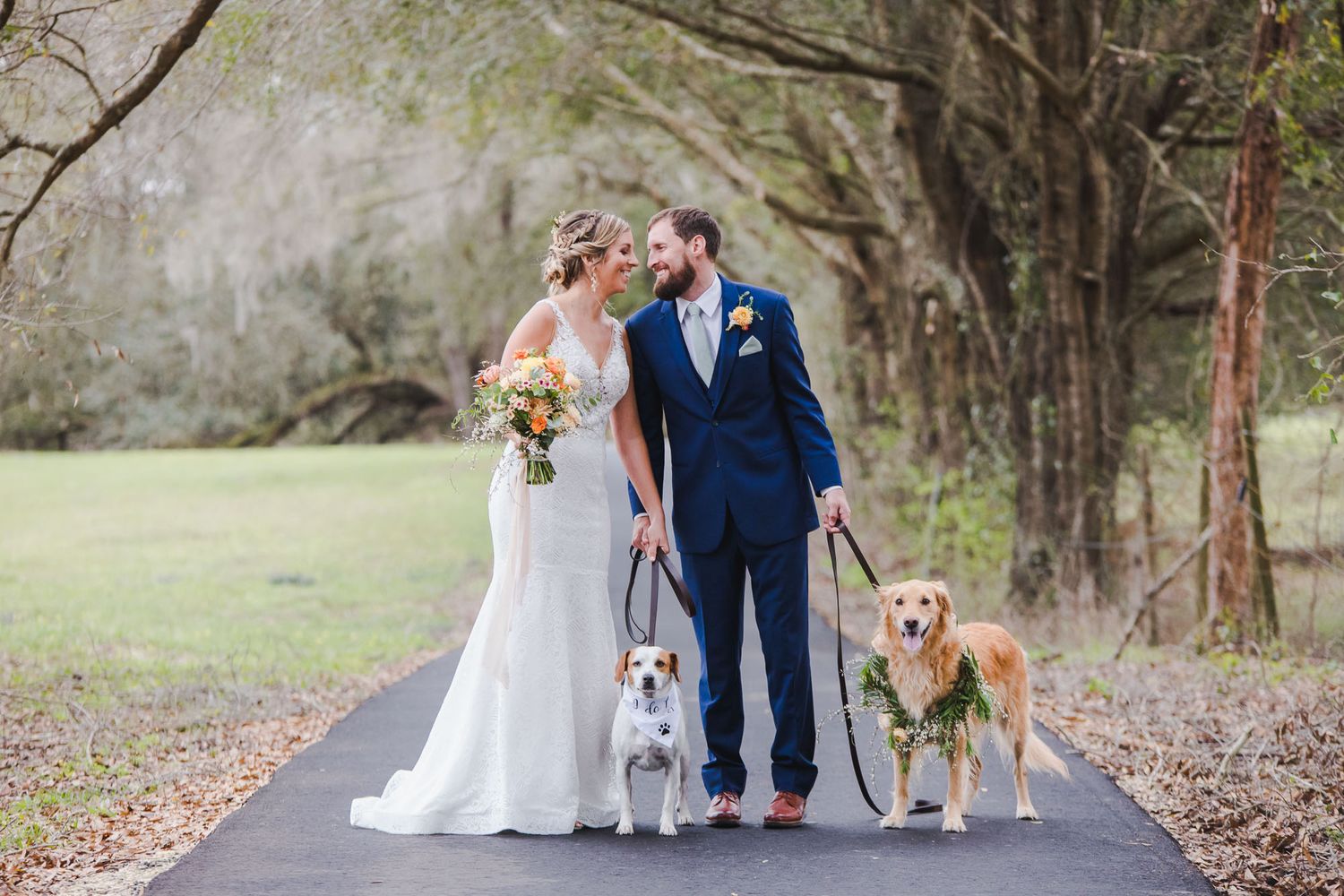
- Portrait participant. The pet joins couple or family portraits, which is often the easiest and most rewarding option.
- Getting-ready buddy. A quiet moment with your pet before the ceremony makes lovely, relaxed photos.
- Reception cameo. A brief appearance during cocktail hour or a first dance, then a return to a quiet area.
Plan around the schedule
- Take the pet portraits early, before the ceremony, when the pet is fresh, the humans aren't in a hurry, and your outfits are at their best.
- Keep the ceremony appearance short. Five to ten minutes is plenty.
- Release the pet to their handler before the reception gets loud, crowded, and busy.
- Offer breaks and water, and let the animal rest.
- Don't plan a long day. Animals get tired, and that shows in their behavior.
Pet safety
- Keep a collar and ID tag on, and consider a microchip.
- Use a leash or secure harness, even for well-behaved pets.
- Avoid toxic flowers and plants. Some common wedding flowers, including lilies, are dangerous for cats and can be harmful to dogs. Check with your florist and a veterinarian.
- Keep an eye on food. Chocolate, grapes, raisins, onions, and sugar-free sweeteners are dangerous for dogs. Wedding food tables are full of risks.
- Watch the ground. Hot pavement, broken glass, and decorations can hurt paws.
- Avoid loud noises, such as fireworks, balloons popping, or confetti cannons near the animal.
- Dress them carefully. Outfits, bow ties, and flower collars should be light, comfortable, and easy to remove. If your pet dislikes clothing, skip it.
How to photograph pets
Animals don't take direction, so photography with pets is about patience, timing, and preparation.
- Shoot at their eye level, which makes the images more engaging.
- Use treats and toys, but don't overdo it, or the pet will fixate on the food.
- Take advantage of a calm moment, such as after a walk or a meal.
- Work quickly, and take breaks.
- Have a helper behind me, getting the pet's attention with a sound or toy.
- Keep the humans relaxed. Pets pick up on stress, and a nervous couple makes a nervous animal.
- Capture the in-between moments, not just the posed shots. A lick on the cheek or a head tilt is often the favorite.
Photos worth planning
- A portrait of the couple with the pet, simple and natural.
- A family portrait including the pet, if they're comfortable.
- A detail shot of the pet's outfit or accessories.
- A candid moment of the pet on the aisle or with a guest.
- A quiet moment of you with your pet, before the ceremony.
- An engagement session with your pet
If you aren't sure how your pet will behave on your wedding day, an engagement session is a low-stakes way to find out. You'll learn how they respond to a photographer, how they handle new places, and which poses work. It also gives you beautiful photos that you can use on save-the-dates, invitations, and your wedding website, and often the images couples treasure most.
If your pet can't attend
You can still include them.
- A framed photo or a sign at the entrance or the reception.
- A pet-themed cocktail, a card, or a donation to a local animal rescue in their honor.
- A portrait session at home, before or after the wedding.
- A mention in your program, with a short note about them.
- A keepsake, like a custom illustration or a stitched patch on a ring pillow.
A sample pet timeline
Here is one example for a ceremony with a dog included.
2:00 p.m. Pet portraits with the couple at the venue, with the handler nearby.
3:30 p.m. The handler takes the pet to a quiet, shaded area with water.
4:45 p.m. The pet returns for a short ceremony walk, then leaves with the handler.
5:00 p.m. Ceremony.
5:30 p.m. A brief family photo with the pet, if they're comfortable.
6:00 p.m. The pet goes home with the handler.
(Times are illustrative. Adjust for your date, venue, and pet.)
Common mistakes
- Assuming the venue allows pets. Always ask.
- Not assigning a handler. Someone has to be responsible, and it shouldn't be the couple.
- Planning a long appearance. Short is better.
- Ignoring toxic plants and foods.
- Skipping a trial run. If you can, practice with the outfit, the leash, and the crowd.
- Forgetting the pet's comfort. If they're stressed, end the appearance early.
If you'd like to include your pet in your wedding or engagement photos, I'd love to meet them. Tell me about their personality, and we'll plan a role that works for them and for you.