You can have beautiful, meaningful family photos at your wedding even when your family is blended, divorced, estranged, or simply complicated. The key is to plan ahead, communicate openly with your photographer, and build a photo list that reflects the people who matter to you, in groupings that feel comfortable for everyone. Here is a practical guide to handling family portraits when your situation isn't a simple one, with ideas for planning, wording, and making the day feel kind and relaxed.
Start with what you want
Before you worry about everyone else's feelings, decide what you want.
- Who do you want in your photos? Think about the people who are important to you, not just the traditional list.
- Which photos matter most? You may care deeply about one or two groupings.
- What would feel uncomfortable? Be honest, so you can plan around it.
- What could you let go of? Not every combination has to be photographed.
A shorter, thoughtful list is easier on everyone than a long one that tries to please every person.
Share the situation with your photographer in advance
Your photographer isn't there to judge. Knowing the details helps them keep the day smooth.
- Tell them about family dynamics, such as divorced parents who prefer separate photos, or relatives who shouldn't be placed together.
- Share names and relationships, so they can call people by name and avoid mistakes.
- Mention sensitive topics, like a loved one who has passed, or someone who isn't attending.
- Ask for their advice. Experienced photographers have seen many situations and can suggest solutions.
- Keep it private. A short note or a conversation is enough, and you don't need to share more than you're comfortable with.
Build a list that works
A written list helps everyone, because it takes pressure off the moment.
- Group people by relationship, such as the couple with each parent, step-parent, and siblings.
- Separate groupings when needed. Divorced parents may prefer to be photographed separately with the couple, and that's perfectly fine.
- Include important relationships beyond the traditional. Step-parents, half-siblings, grandparents, godparents, and close family friends can all have a place.
- Keep the list manageable. Ten to fifteen groupings is usually plenty.
- Put the most important photos first. Time can get tight, and you want your top priorities captured.
- Share the list with a helper, who can gather the right people at the right time.
Examples of how families can be grouped
Every family is different, and these examples show a range of ways to organize photos.
- When parents are divorced
- Couple with one parent and their partner, then couple with the other parent and their partner.
- Couple with each parent individually.
- Couple with siblings and both parents, only if everyone is comfortable.
- When there are step-parents and step-siblings
- Couple with the parents and step-parents together, or separately.
- Couple with all siblings, including step and half siblings.
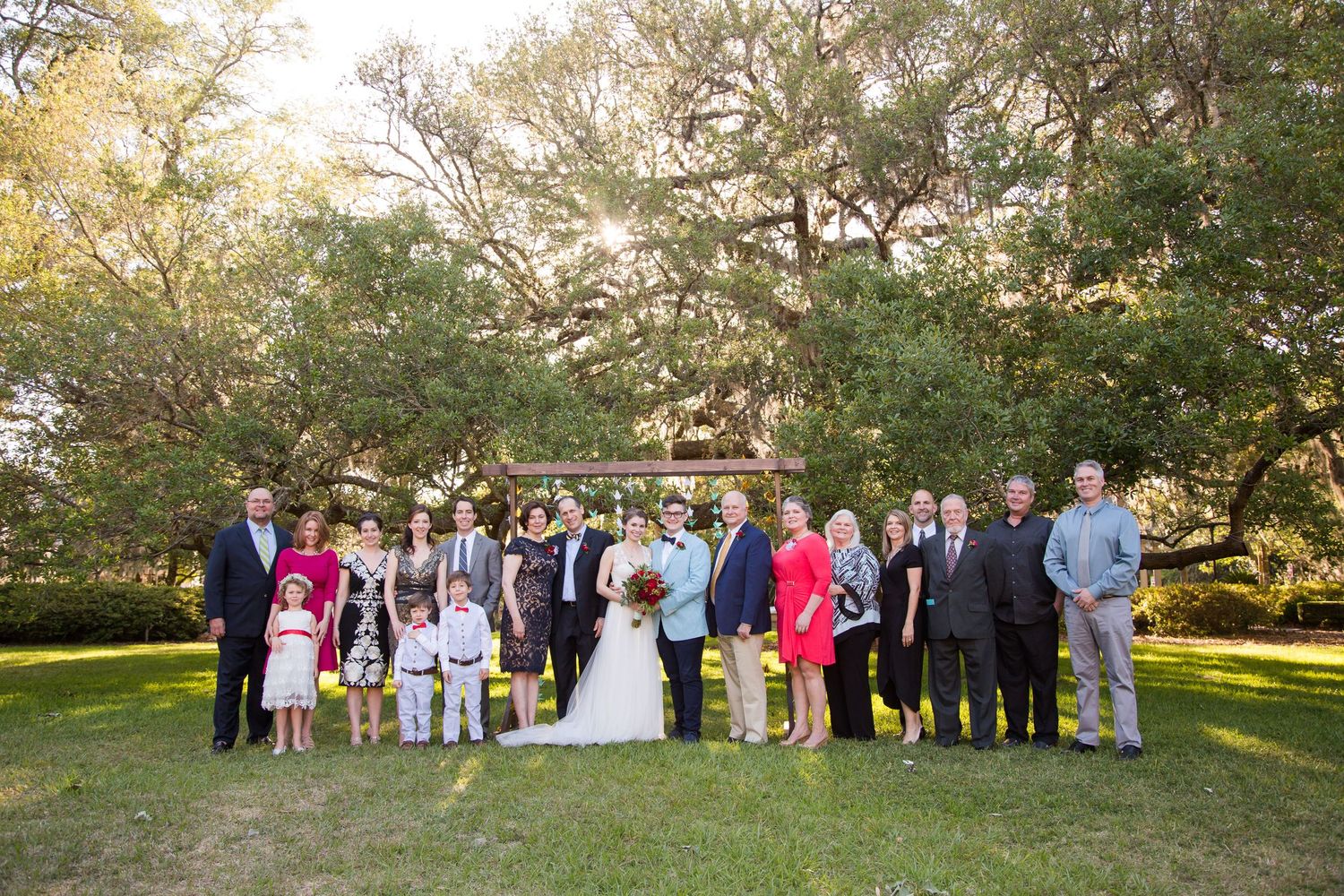
- Couple with each side of the family, and then with the full group.
- When there are children from earlier relationships
- Couple with the children, as a new family.
- Individual photos with each child.
- A family portrait that includes the whole new household.
- When someone is estranged or absent
- Skip the grouping, with no explanation needed.
- Photograph the people who are present, in the combinations that feel right.
- When a loved one has passed
- A framed photo or a keepsake held by the couple.
- A small memorial item, like a flower or a locket, photographed as a detail.
- A quiet portrait of the couple with the photo, if it feels right.
Make it easier for everyone
Family photos can be emotional, and a little planning helps.
- Talk to key family members beforehand. A short, kind conversation can prevent surprises.
- Explain the plan. Let people know when and where to gather, and how long it will take.
- Choose a calm time and place. Before the ceremony, in a quiet, shaded spot, is often best.
- Assign a helper. A trusted friend or relative can gather people so you don't have to.
- Keep it moving. Efficient, well-organized photos reduce tension.
- Offer choice. Give people a way to opt out of a photo gracefully.
- Be kind to yourself. You can't control everyone's feelings, only your own plan.
Handling difficult moments
Sometimes tension arises, even with good planning. A few approaches help.
- Stay calm, and keep the energy light.
- Redirect politely. If someone insists on something that doesn't work, offer an alternative.
- Ask your photographer to take the lead. They can speak in a neutral voice and keep things moving.
- Take a break, if emotions run high.
- Remember the bigger picture. The goal is a beautiful day and photos you'll treasure.
Sample wording
If you need to ask a family member for something, here are a few gentle examples you can adapt.
- To divorced parents:
- We're planning family photos before the ceremony, and we'd love to include each of you. We'll do them in separate groups so everyone is comfortable. Thank you for helping make this day easy.
- To a step-parent:
- You've been such an important part of our family, and we'd love to have you in the photos. We'll let you know the time and place.
- To someone who may decline:
- We'd love to have you in a photo, but there's no pressure. Just let us know what feels right.
What your photographer can do
A good photographer is a calm, neutral presence.
- Keep the process efficient, so people aren't waiting long.
- Call people by name to keep things friendly.
- Pose groups in comfortable ways, with natural spacing.
- Capture candid moments that show real relationships, not just formal groupings.
- Adapt as needed. If a grouping isn't working, they'll adjust.
- Protect the schedule, so photos don't cut into your day.
Photos beyond the formal list
Some of the best family photos happen when no one is posing.
- A parent helping you get ready.
- A quiet moment with a grandparent.
- Siblings laughing together.
- A child dancing with a relative.
- A candid toast or a hug.
These images often say more about your family than a formal portrait ever could. Tell your photographer which relationships you'd like them to watch for.
Common mistakes
Trying to please everyone. It's better to make a plan that works than to chase impossible harmony.
Skipping the conversation. A quick call can prevent hurt feelings.
Overloading the list. More photos can mean more stress.
Forgetting important relationships. Step-siblings, godparents, and close friends often matter deeply.
Waiting until the last minute. Plan ahead, and share the list early.
The bottom line
Every family is different, and your wedding photos should reflect yours. Decide what matters, share your plan, and let your photographer guide the day. If you'd like help building a list that fits your family, I'd be glad to talk it through, privately and kindly.