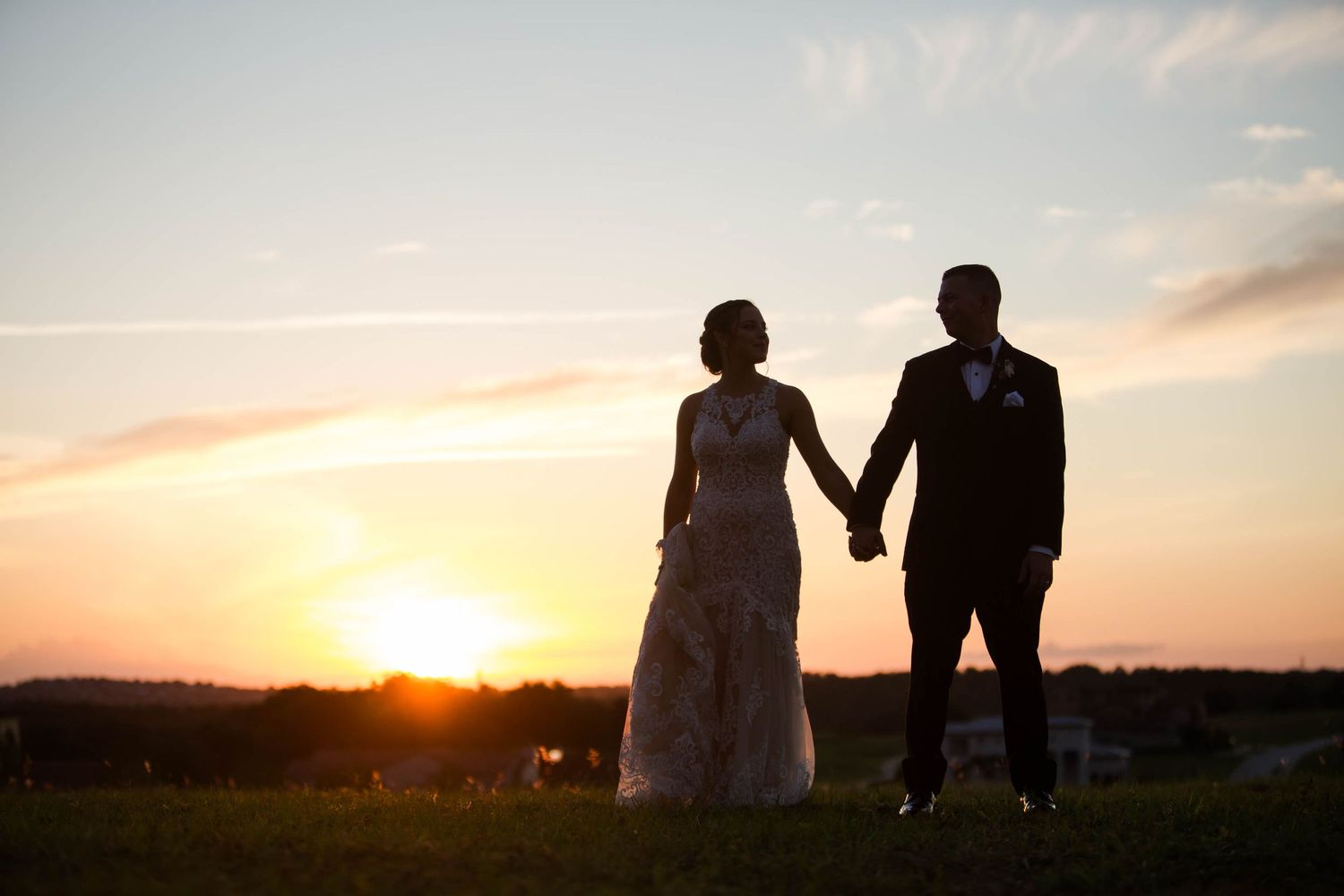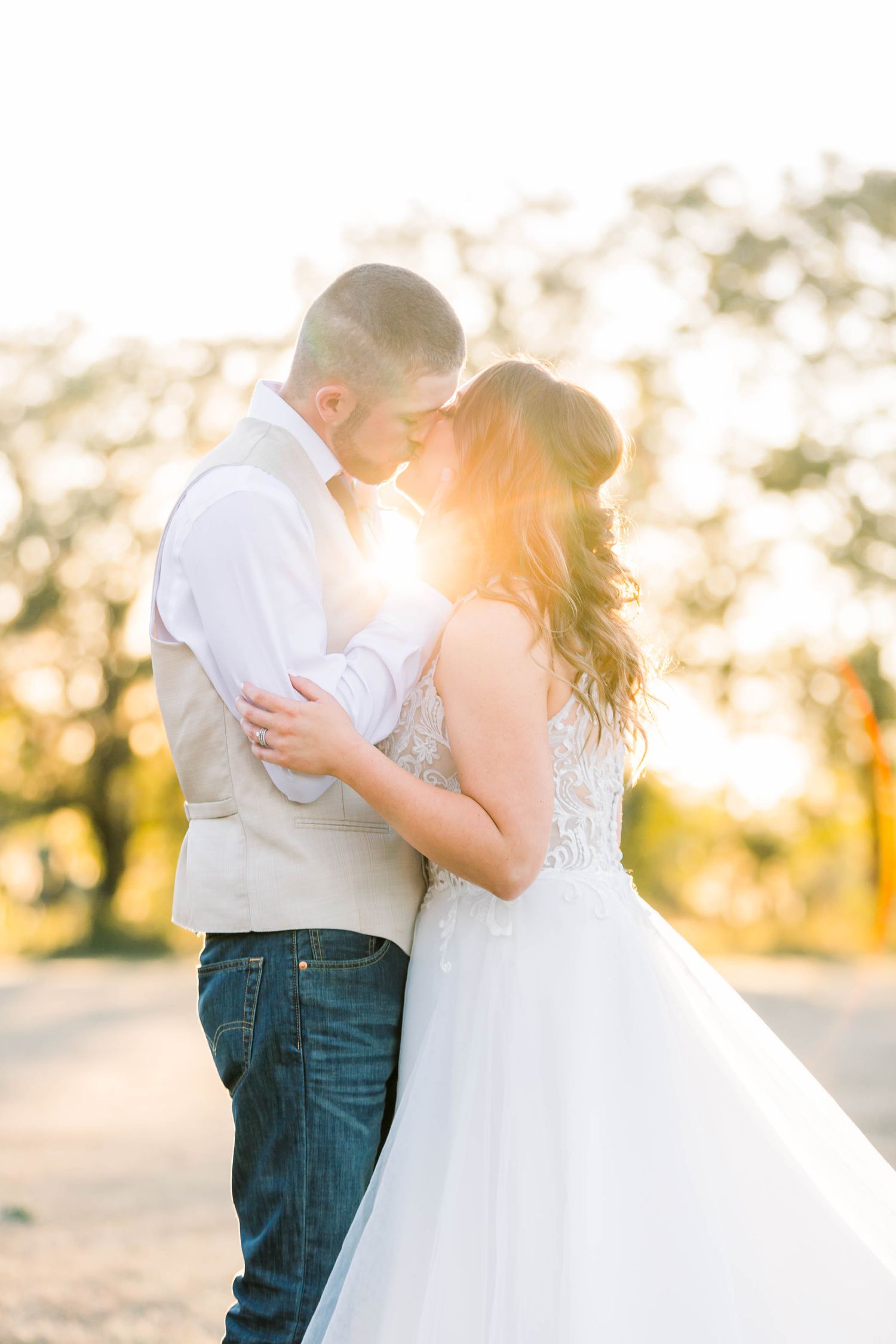
Golden hour, the roughly hour before sunset when light turns soft and warm, falls between about 5:00 and 7:30 p.m. in North Florida depending on the month, and it shifts by more than two hours across the year. This cheat sheet gives approximate sunset times by month and the matching golden hour window, so you can pick a ceremony and portrait time that works with the light. Always confirm exact times for your date and location.
What golden hour is, and why it matters
Golden hour is the period shortly after sunrise and shortly before sunset when the sun sits low in the sky. The light travels through more atmosphere, which softens it, warms its color, and reduces harsh shadows. Skin glows, backgrounds turn gold, and everything looks more flattering. For wedding photos, it's the best light of the day, and it's worth planning around.
How to use this chart
- The sunset times below are approximate and refer to the middle of the month in the Gainesville area.
- Jacksonville and the Atlantic coast typically see sunset earlier than Gainesville by a few minutes.
- Tallahassee and the Panhandle see sunset later, sometimes by 20 to 30 minutes, because they sit farther west in the same time zone.
- Golden hour usually begins about 60 to 75 minutes before sunset and fades just after.
- Daylight saving time shifts everything by an hour in March and November.
Approximate sunset and golden hour by month (Gainesville area)
Month Approx. sunset Golden hour window Notes
January 6:05 p.m. 5:00 to 6:05 p.m. Early sunsets, cool evenings.
February 6:30 p.m. 5:25 to 6:30 p.m. Days lengthen noticeably.
March 7:40 p.m. 6:30 to 7:40 p.m. Clocks change, so check the exact date.
April 7:50 p.m. 6:45 to 7:50 p.m. Comfortable and popular.
May 8:10 p.m. 7:00 to 8:10 p.m. Late sunsets, warmer evenings.
June 8:30 p.m. 7:15 to 8:30 p.m. Longest days, with storm risk.
July 8:30 p.m. 7:15 to 8:30 p.m. Hot, humid, and late.
August 8:10 p.m. 7:00 to 8:10 p.m. Storm risk, hazy light.
September 7:35 p.m. 6:25 to 7:35 p.m. Light starts to soften.
October 7:00 p.m. 5:50 to 7:00 p.m. Excellent light and weather.
November 5:30 p.m. 4:25 to 5:30 p.m. Clocks fall back, early sunsets.
December 5:35 p.m. 4:30 to 5:35 p.m. Earliest sunsets of the year.
(Times are illustrative. Check a sunset calculator for your date and location.)
Matching your ceremony time to the light
A good rule of thumb: start your ceremony about 1.5 to 2 hours before sunset, and plan couple portraits for the golden hour that follows. Here's what that looks like by season.
- Winter (December to February): A ceremony around 3:00 to 4:00 p.m. gives you good light and time for portraits before dark.
- Spring (March to May): A ceremony around 5:30 to 6:30 p.m. suits the later sunsets.
- Summer (June to August): A ceremony around 6:30 to 7:00 p.m. keeps guests out of the worst heat, though storms are a risk.
- Fall (September to November): A ceremony around 4:00 to 5:30 p.m. depending on the month, with an earlier time in November.
How light changes by region
- Inland (Gainesville, Ocala, Tallahassee): Trees and canopy create dappled light and early shade, which can start the golden look sooner than a sunset calculator suggests.
- Atlantic coast (St. Augustine, Amelia Island, Jacksonville Beach): Open horizons and reflective water extend the glow, but morning light is stronger than evening on east-facing beaches.
- Gulf coast (Cedar Key and the Panhandle): West-facing shores give dramatic sunsets over the water, a different experience from the Atlantic side.
- Florida-specific notes on golden hour
- Haze and humidity can soften light and add warm color, especially in summer, but they can also dull contrast.
- Afterglow is the soft light just after sunset. It lasts 15 to 30 minutes and often produces rich color, so don't pack up the moment the sun disappears.
- Clouds can improve a sunset by adding color and texture, or block it entirely. Plan a backup for portraits.
- Tall trees and buildings can cut the sun early. Scout your location to see when the light actually disappears.
Don't forget morning golden hour
Sunrise has a golden hour too, and for elopements and small weddings it can be even better. The light is soft and warm, the air is cooler, and locations are quiet. If a late-day ceremony isn't possible, a morning session is a strong alternative.
How to get the exact time for your date
- Use a sunset calculator or a weather app and enter your wedding date and the city.
- Note the sunset time and subtract about 60 to 75 minutes for the start of golden hour.
- Visit the venue at that time if you can, to see where the light falls.
- Share the times with your photographer and planner so the timeline reflects them.
- Quick tips for using golden hour well
- Schedule couple portraits first, before the sun drops too low.
- Keep the group photos earlier, in open shade, so golden hour is saved for you.
- Build in a buffer. Light changes quickly, and delays eat into the best minutes.
- Plan a few minutes of quiet. Some of the best photos happen when no one is directing anything.
Two examples of using the chart
- An April wedding. Sunset is around 7:50 p.m., so golden hour begins near 6:45 p.m. A ceremony at 5:30 p.m. gives you a comfortable, well-lit service, with cocktail hour overlapping the early golden light. You and your partner slip away for about 15 to 20 minutes of portraits around 7:00 p.m., and everyone is back in time for dinner.
- A November wedding. Sunset is near 5:30 p.m., so golden hour begins around 4:25 p.m. A ceremony at 3:00 p.m. leaves time for portraits right after, before the light fades. Plan the reception to move indoors or under lights as the evening cools, and share the earlier sunset with your guests so they arrive on time.
Tools worth using
You don't need anything fancy to check light. A simple sunset calculator, a weather app, or a photographer's planning app will give you sunrise, sunset, and golden hour for any date and place. If you want to see exactly where the sun will sit at your venue, many tools show the sun's direction on a map, which helps you decide where to place the ceremony and where to take portraits.
Keep this handy!
Light is one of the few things in a wedding you can plan around with almost no cost. If you'd like help matching your ceremony time to your date and venue, send me your details and I'll suggest a schedule that gives you the best light available.